Click here for prior news from October 1st 2025
Click here to look at earlier maps (and events) over 4000 years of history for "Israel - Deep inside the plucky country".
| ||||||

The US had opened a consulate in Old Jerusalem back in 1844. But like diplomatic missions of nearly every other country, from 1966 until 2018 (unofficially from May 1948 when the consul-general in Jerusalem was shot dead) the actual US Embassy had been in Tel Aviv, a result of the ambiguous legal status surrounding Jerusalem for more than a century. Under the UN Partition Plan of November 1947, Jerusalem was to have been placed under international governance, which thus precluded it from being considered under the sovereignty of any State. But while this UN plan had been accepted by the Jews and the majority of UN countries, it had been rejected by the Arabs (and all of the surrounding Arab countries) who declared war.
The US Embassy opened at its Jerusalem location on May 14, 2018, the 70th anniversary of the creation of the modern State of Israel. On March 4, 2019, the US Consulate-General was formally integrated into the US Embassy in Jerusalem.
Australia Israel relations
In Australia in October 2018, Prime Minister Scott Morrison announced Australia was reviewing whether to move Australia's embassy in Israel from Tel Aviv to Jerusalem, and to recognize Jerusalem as the capital of Israel. On Friday 14 December 2018, Morrison announced Australia's recognition of West Jerusalem as the capital of Israel, though there were no immediate plans to move its embassy from Tel Aviv.
This recognition of West Jerusalem as the capital of Israel was reversed by the ALP Federal Government on Tuesday 18 October 2022. Foreign Minister Penny Wong stressed that Australia remained a "steadfast friend" to Israel, however its embassy would remain in Tel Aviv.
Jerusalem's history over the past century
British forces captured the city from the Ottoman Turks during World War I and maintained control under a League of Nations mandate for 30 years. In November 1947, a United Nations plan terminated the British mandate for implementation at midnight May 14 1948, and partitioned Palestine into a Jewish state and an Arab state with Jerusalem to become an international zone. While accepted by the Jews, the proposed plan never was implemented as civil war erupted. The British organized their withdrawal and intervened only on an occasional basis. When a cease-fire ended the fighting in 1949, Israeli forces held Jerusalem's western precincts while Jordan occupied the city's eastern districts, including the old city with its holy sites such as the Church of the Holy Sepulchre, the al Aqsa Mosque and the Western Wall.
Click here for more details and to see a map of the UN's original proposal. The State of Israel increased their area by almost 60% of the area that had been allocated to the proposed Arab state. This included the Jaffa, Lydda and Ramle area, Galilee, some parts of the Negev, a wide strip along the Tel-Aviv to Jerusalem road, and some territories in the West Bank, placing them under military rule. With Jordan occupying the West Bank and the Egyptian military occupying Gaza, no state was created for the Palestinian Arabs.
Israel and Jordan soon annexed the portions of Jerusalem they held, with Israel in 1950 declaring the city as its capital, but this accordingly went unrecognized by other nations. In the 1967 Six-Day War, Israel captured East Jerusalem, along with the West Bank. Israel later annexed East Jerusalem and reunified the city, again an act that has gone unrecognized by the international community while Palestinian claims remain unresolved.
Six Day War June 1967
Click here for the whole article
Abraham Rabinovich
June 05, 2007
FORTY years after the Six Day War, the consequences of Israel's extraordinary victory are yet to be sorted out. Israel was a tiny Middle Eastern backwater in 1967, with a population of 2.6 million surrounded by a hostile Arab world of 80 million. This disparity seemed to defy the natural order of things and it was a virtual consensus in the Arab world that the Jewish state would fall, sooner rather than later. In Israel itself, the enthusiasm and energy that marked the founding of the state out of the ashes of the Holocaust had been dimmed by the petty problems of getting by in a country with a massive defence burden and a lame economy.
It was the Soviet Union, for reasons never adequately clarified, that lit the fuse that would transform the region. In mid-May 1967, it declared that Israel was massing troops in the north in preparation for an attack on Syria. Israeli prime minister Levi Eshkol offered to personally tour the north with the Soviet ambassador to show it wasn't true. The ambassador declined.
There had been small-scale skirmishing between Israel and Syria over the headwaters of the Jordan and Israeli leaders had issued warnings, but there was no massing of troops. Egyptian president Gamal Abdel Nasser, the leading figure in the Arab world, felt impelled to come to Syria's aid. He moved his divisions through the Sinai desert towards Israel, ordered the removal of UN troops who had been stationed there since 1956, and closed the Straits of Tiran (which separates the Gulf of Aqaba from the Red Sea) to Israeli shipping.
Back in 1956, Nasser had blocked Israeli shipping from passing through the Straits. A short war followed with Israel capturing the whole of the Gaza Strip and the Sinai Peninsula. After the US pressured Israel to withdraw, Israel declared that if Egyptian forces would again blockade the entrance to the Gulf of Aqaba, it would consider this a "casus belli" - case of war. Israel mobilised its reserves.
Nothing happened for more than two weeks. But mobilisation had paralysed the Israeli economy and Jerusalem had to either stand down or strike. On the morning of June 5, Israeli planes, flying low to avoid radar, suddenly rose into the Egyptian skies. Within three hours, the Egyptian air force was destroyed. Soon after, the Jordanian, Syrian and part of the Iraqi air forces were gone, too.
On the third day of the war, the West Bank and Jordanian Jerusalem fell. Syria's Golan Heights followed. The Arab world was stunned, Israel euphoric. The war catapulted Israel into a new era. Brimful of self-confidence and renewed energy, it attracted Jewish immigrants from the West and more than a million from the Soviet Union. Since 1967, Israel's population has tripled to 7.1 million (of whom 1.4 million are Israeli Arabs), its gross national product has grown by 630 per cent and per capita income has almost tripled to $21,000.
A major result of the Six Day War was to persuade the Arab world that Israel was too strong to be defeated. Internalising that view, Nasser's successor, Anwar Sadat, became in 1970 the first Arab leader to declare readiness to make peace with Israel if it withdrew from all territory it had captured in the Six Day War. Israel insisted, however, on territorial changes.
It took the 1973 Yom Kippur War to persuade Israel to withdraw from all Egyptian territory and for Egypt to agree to peace without insisting on Israel's withdrawal on other fronts as well.
The Oslo accords in 1993, marking the beginning of a dialogue between Israel and the Palestinians, also enabled Jordan to make peace with Israel without being accused of betraying the Palestinian cause.
In 2000, Syria announced its readiness for peace. Though negotiations with Damascus broke down, virtually the entire Arab world now accepted the legitimacy, or at least the existence, of the Jewish state in its midst.
But increasing radicalisation has brought to the Palestinian leadership a movement dedicated to Israel's destruction. If there is an answer for Israel, it lies, as in 1967, in bold and imaginative leadership — but this time on the political playing field.
West Bank Fence
|

Extract: Article by Amos Harel, Haaretz.com
July 14, 2009
Seven years after construction work began on the West Bank separation fence, the project seems to have run aground. Work has slowed significantly since September 2007. With fierce opposition coming from the United States, Israel has halted work on the "fingers" — enclaves east of the Green Line that were to have included large settlement blocs such as Ariel, Kedumim, Karnei Shomron and Ma'aleh Adumim, within the fence. The military has, in practice, closed up the holes that were to have led to these "fingers". But giant gaps remain in the southern part of the fence, particularly in the southern outskirts of Jerusalem, in the Etzion bloc and in the Judean Desert.
Since the cabinet under former prime minister Ariel Sharon first approved construction of the fence, in June 2002, the route has undergone some dramatic changes. The original route, which was inspired by Sharon, was to have effectively annexed about 20 percent of the territory of the West Bank to Israel.
In February 2005, the cabinet amended the route to include just nine percent of the West Bank. In April 2006 an additional one percent was shaved off by the government of Ehud Olmert.
In practice, however, the route encompasses only 4½ percent of West Bank land. The four "fingers" in the last map (and which Israel presented at Annapolis in November 2007) were never built, not at Ariel and Kedumim (where a "fingernail" was built, a short stretch of fence east of the homes of Ariel) — not at Karnei Shomron and Immanuel — not at Beit Arieh, nor south of that, at Ma'aleh Adumim. Instead, with little publicity, fences were put up to close the gaps closer to the Green Line, at Alfei Menashe instead of at Kedumim, at Elkana instead of Ariel and in the Rantis area instead of at Beit Arieh.
About 50,000 people in these settlements remain beyond the fence. West of Ma'aleh Adumim the wall built along Highway 1 blocks the gap in the barrier and leaves the city's 35,000 residents outside of the barrier, forcing them to pass through a Border Police checkpoint in order to reach Jerusalem.
Large gaps remain in the southern West Bank. Between Gilo in south Jerusalem and Gush Etzion are tens of kilometres of barrier, work on which was suspended due to High Court petitions. As a result access to Jerusalem from the direction of Bethlehem (now a part of the Palestinian Territories) is relatively easy — for commuters and terrorists both.
Click here for some news in Sep 2014.
A second, 30-kilometre gap in the fence, stretches from Metzudat Yehuda (Yatir) in the west to the Dead Sea in the east. The state announced during a recent High Court deliberation of a petition submitted by area Bedouin that work on the barrier there was suspended.
Defence Minister Ehud Barak is "determined to complete the security fence, despite the delays", his office said in a statement. "The minister and the military establishment are working to solve the problems delaying its completion".
Defence Ministry officials pointed out that Barak was "among the first supporters of the fence and did much to advance its construction".
Security officials claim the rate of construction depends on finding a solution to the legal issues and point out proudly that there is an unbroken barrier from Tirat Zvi in the Beit She'an Valley (in Northern Israel, just west of the Jordan River) to the southern entrance to Jerusalem, and from southern Gush Etzion (south west of Jerusalem) to Metzudat Yehuda (south east of Hebron).
East of East Jerusalem — E1 and Ma'ale Adumim
|


Click here for a recent article in 2023 on E1 and Ma'ale Adumim delayed but not abandoned
Unilateral Thinking (an article in April 2006)
Click here for the full article
Finally, after years in the planning prior to 2006, construction of an Israeli police station is under way in the now infamous E1 area, 12 square kilometers, a patch of empty West Bank land that stretches from the eastern municipal boundary of Jerusalem to the settlement-city of Ma'ale Adumim, which sits across the Jerusalem-Dead Sea highway some five kilometers (three miles) to the east.
Infamous, because every prime minister of Israel for the past decade has wanted to develop E1 in order to fill in the space between Ma'ale Adumim and Jerusalem, with the intention of securing Israel's hold over the settlement and its smaller satellite communities, which together constitute the Ma'ale Adumim settlement bloc. And every US administration up until now has nixed Israeli development here, on the grounds that it would seriously hamper Palestinian territorial contiguity between the north and south of the West Bank, as well as access from the West Bank to Jerusalem, thereby undermining the viability of a Palestinian state with East Jerusalem as its capital, the only realistic formula on the table for Israeli- Palestinian peace.
Ma'ale Adumim, a settlement of 33,000 residents, has for all intents and purposes become a suburb of Jerusalem, even the Palestinians have tacitly accepted the demographic reality. The Geneva Accord, the unofficial 2003 draft of an Israeli- Palestinian final-status agreement, envisaged the settlement remaining under Israeli control. The competition is over who controls the space in between. The Palestinians reject the notion of a permanent Israeli presence in E1, and consecutive US administrations have viewed this as the red line that Israel should not cross.
Building first started in Ma'ale Adumim itself in 1975, during Yitzhak Rabin's first term as prime minister. And it was Rabin, during his second term in office, in August 1994, who formally included E1 within Ma'ale Adumim's city limits, "or order to create territorial contiguity" between the fast-growing settlement and Jerusalem, according to Benny Kashriel, Ma'ale Adumim's mayor for the past 14 years. That Rabin term produced a general master plan for the area (the term E1 is short for East 1, as the parcel of land was marked on old Jerusalem area zoning maps). In 1997, prime minister Benjamin Netanyahu's cabinet commenced procedures to authorize the allocation of the land to built on, and the Housing Ministry started work on detailed plans. Netanyahu's successor, Ehud Barak, supported the project, according to Kashriel, and the bureaucratic process for the approval of the plans got underway.
Gaza Strip
|

Israeli Gaza Strip Barrier
Wikipedia
The Israel and Egypt — Gaza Strip barrier is a separation barrier first constructed by Israel in 1994 between the Gaza Strip and Israel. An addition to the barrier was finished in 2005 to separate the Gaza Strip and Egypt. The fence runs along the entire land border of the Gaza Strip. It is made up of wire fencing with posts, sensors and buffer zones on lands bordering Israel, and concrete and steel walls on lands bordering Egypt.
Background: The Gaza Strip borders Egypt on the south-west and Israel on the south, east and north. It is about 41 kilometres long, and between 6 and 12 kilometres wide, with a population of about 2 million people. The shape of the territory was defined by the 1949 Armistice Agreement following the creation of Israel in 1948 and the subsequent war between the Israeli and Arab armies. Under the armistice agreement, Egypt administered the Strip for 19 years, to 1967, when it was occupied by Israel in the 1967 Arab-Israeli War.
In 1993, Israel and the Palestinian Liberation Organisation signed the Oslo Accords establishing the Palestinian Authority with limited administrative control of the Palestinian territories. Pursuant to the Accords, Israel has continued to maintain control of the Gaza Strip's airspace, land borders and territorial waters. Israel started construction of the first 60 kilometres long barrier between the Gaza Strip and Israel in 1994, after the signing of the Oslo Accords. In the 1994 Interim Agreement on the West Bank and the Gaza Strip, it was agreed that "the security fence erected by Israel around the Gaza Strip shall remain in place and that the line demarcated by the fence, as shown on the map, shall be authoritative only for the purpose of the Agreement" (ie. the barrier does not constitute the border). The barrier was completed in 1996.
The barrier was largely torn down by Palestinians at the beginning of the Al-Aqsa Intifada in September 2000. The barrier was rebuilt between December 2000 and June 2001. A one-kilometre buffer zone was added, in addition to new high technology observation posts. Soldiers were also given new rules of engagement, which, according to Ha'aretz, allow soldiers to fire at anyone seen crawling there at night. Palestinians attempting to cross the barrier into Israel by stealth have been shot and killed.
Hamas, a US-designated terrorist organisation, came to power in Gaza through elections held in 2006. It has since imposed authoritarian rule over the territory, clashing with the more moderate Fatah party — which runs the Palestinian Authority that controls parts of the West Bank — and losing much of its popularity.
October 2023
Israeli Prime Minister Benjamin Netanyahu said his country was at war with Hamas after the militant group’s forces poured across the border from Gaza on Saturday October 7 2023, killing over 1,000 residents and capturing over 200 hostages. A major invasion ensued with tens of thousands killed, till a ceasefire after a fashion, with final hostages release Monday morning (local time) October 13 2025
|
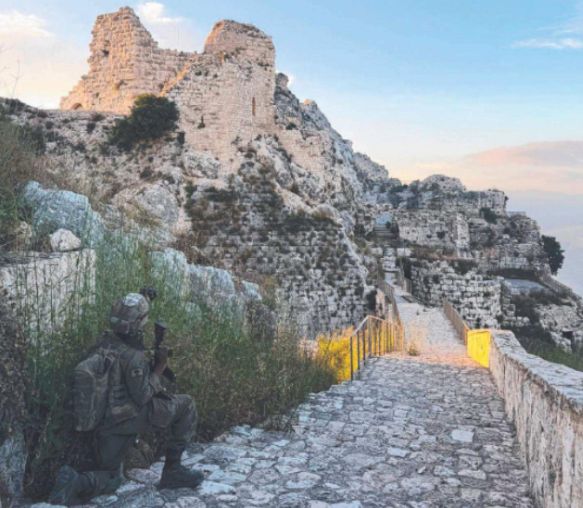
Netanyahu lauds castle grab as IDF threatens Beirut
The Australian
Anat Peled, Wall Street Journal
Tuesday, June 2nd 2026
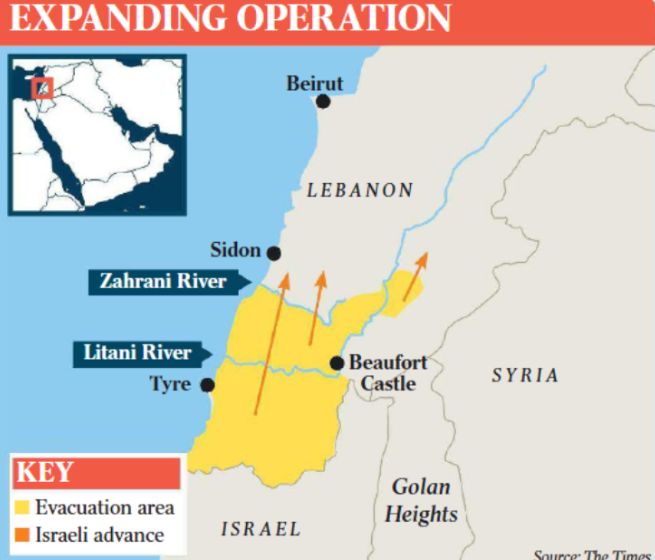
Israeli troops captured a strategic mountain in southern Lebanon in the deepest incursion into the country in more than a quarter-century, while US Secretary of State Marco Rubio spoke to Lebanese and Israeli leaders in an effort to keep negotiations going. As Israeli troops expanded their ground offensive against Hezbollah, they took the mountaintop Beaufort Castle, a 900-year-old Crusader-built fortress near the city of Nabatieh, 26 years after they last withdrew from the castle.
The capture of Beaufort Castle followed days of airstrikes and intense fighting in nearby villages between Israeli troops and Hezbollah militants. The capture marked a major Israeli advance in the latest Israel-Hezbollah war, which began on March 2 when Hezbollah fired rockets into northern Israel two days after the US and Israel attacked its main backer, Iran. Since then, Israel has launched a ground invasion, capturing dozens of Lebanese villages and towns close to the border. Hezbollah has launched thousands of missiles and drones at Israeli soldiers in southern Lebanon and northern Israel.
Israeli Prime Minister Benjamin Netanyahu declared that the capture of Beaufort Castle marked a “dramatic step and a dramatic change” in his country’s military campaign in Lebanon “We have returned united, determined and stronger than ever,” the Prime Minister said.
On Monday, Mr Netanyahu and Defence Minister Israel Katz said they had ordered strikes on the southern suburbs of the capital, Beirut, where Hezbollah holds sway. The escalation is piling more pressure on Lebanon’s fragile government and complicating negotiations between the US and Iran, which has made an end to fighting on that front one of its conditions for a deal. But Mr Netanyahu has come under pressure from critics who say he has allowed the US to tie his hands in fighting the militant group.
US Secretary of State Mr Rubio spoke to Lebanese President Joseph Aoun and Mr Netanyahu to propose a fresh path to continue ongoing negotiations, according to a US official who spoke on condition of anonymity. Under the proposal, Hezbollah would halt all attacks on Israel and Israel would refrain from escalating military operations in Beirut, according to the official.
In a televised statement, Lebanese parliament Speaker Nabih Berri, a key Hezbollah ally, said he can guarantee the militant group’s “full, comprehensive and immediate commitment to a ceasefire”. “But who will force Israel to stop its aggression?” he said in a statement on his TV station, NBN. Iran’s Foreign Ministry said on Monday that a ceasefire in Lebanon remains a key condition for any deal with the US to end the Middle East war. “We insist that a ceasefire in Lebanon is an essential condition for any deal aimed at ending the war,” Foreign Ministry spokesman Esmaeil Baghaei said at a weekly press briefing.
The Israeli military already controlled territory up to the Litani River in Lebanon, but troops are pushing to the Zahrani River, about 10km to the north, warning any residents to leave the area or risk being killed. Beaufort Castle sits about 15km from the Israeli border. Israel seized it during the 1982 Lebanon war before withdrawing in 2000. “Our forces crossed the Litani. They seized commanding high ground. They captured the Beaufort Ridge. And now, my instruction is to deepen and expand our hold in areas that were under Hezbollah’s control,” Mr Netanyahu said in a video that included a photo showing the flags of Israel’s Golani Brigade waving on top of the fortress.
Israel sent waves of troops into Lebanon in March, when Hezbollah began firing rockets across the border following the US-Israeli attack on Iran. The Israeli military said it launched the operation to capture Beaufort several days ago as part of an effort to expand what the military calls the forward defence line, or large security zone controlled by Israel. The high ground overlooks the area of Nabatieh and was used in past wars to fire projectiles at Israel, military says.
Orna Mizrahi, a senior researcher at the Institute for National Security Studies at Tel Aviv University, said the site held strategic importance as high ground and in terms of pushing back Hezbollah. At the same time, she believed Israel was unlikely to hold on to the castle for the long term due to the bitter experience and the resources it would require. “It is likely a temporary seizure for the purpose of the current fighting, and it could also serve as a type of trading card for the future in the negotiations with the Lebanese,” she said.
Ali Salame, from Kfar Remen in Nabatieh district near the castle, said the seizure of the fortress brought back bad memories of long Israeli occupations. “It is scary and terrifying, because it makes you remember the 15 years of the occupation of the border villages, and makes you worry more about the next phase” he said.
Israel’s intensified ground invasion comes at a sensitive diplomatic moment, as the US and Iran are negotiating a memorandum of understanding to end the war in Iran. Mr Netanyahu has said Israel will strike harder in Lebanon after Hezbollah racked up successful hits on Israeli soldiers through the use of explosive drones.
More than 3000 people in Lebanon have been killed by the fighting since early March, according to Lebanese health authorities, who don’t say how many were combatants. Mr Netanyahu said on Sunday Israel has killed 700 Hezbollah members in the past month. More than a million people have been pushed from their homes in southern Lebanon since Israel expanded its invasion of the country. Tens of thousands of Israelis in the country’s north have also been displaced by Hezbollah rockets and drones. Israeli troops are destroying buildings in southern Lebanon to create a security zone near the border that Mr Katz has compared to the flattened buffer zone in Gaza. Many Israeli politicians and northern residents have voiced frustration at what they perceive as Israel’s inability to strike Hezbollah in Beirut due to US restrictions.
Israel is struggling to come up with an answer to Hezbollah’s attacks with explosive first-person-view drones, small and cheap devices that have dominated the battlefields of Ukraine. The drones are now the leading cause of Israeli battlefield deaths in Lebanon, responsible for eight of the 12 soldiers killed since a shaky ceasefire went into effect in April.
|
The Australian
Joe Kelly
Tuesday 9th June 2026
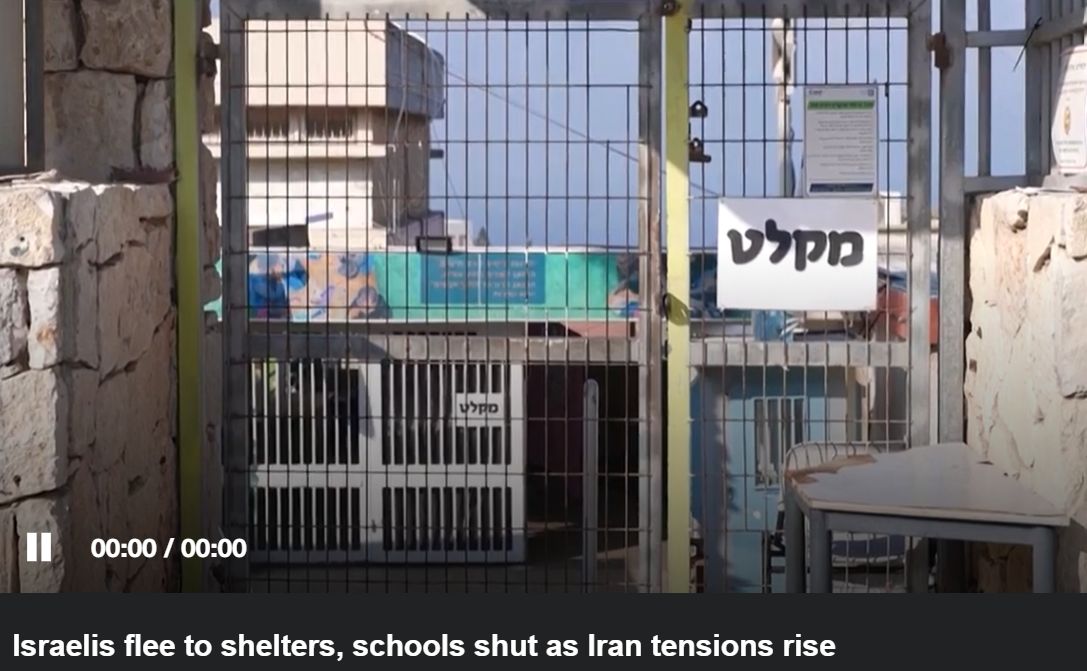
Iran and Israel have ended multiple exchanges of fire but left open the possibility of resuming attacks, after the two sides exchanged fire on Monday for the first time since early April. However Iran has threatened “more severe and crushing measures” if the Jewish state continues its campaign in southern Lebanon.
The new red line from the Islamic regime came after Israeli Prime Minister Benjamin Netanyahu defied Donald Trump by retaliating against an Iranian missile bombardment in an escalation that threatens to derail the Washington-Iran peace talks. Shattering the fragile April 7 ceasefire, the Islamic regime rained four waves of missiles down on Israel on Sunday, prompting a fierce retaliatory strike.
Mr Trump responded in a Truth Social post on Monday morning, telling both sides to “immediately stop shooting.” The previous day he had urged Mr Netanyahu against an escalation against Tehran, but the Israeli Prime Minister pushed ahead despite the US President’s advice to the contrary. “Both sides, Israel and Iran, are looking to do an immediate ceasefire,” Mr Trump posted on Truth Social. “Final negotiations on “Peace” are proceeding, subject to ignorance or stupidity getting in its way. The Blockade will remain in place, and in full force and effect, until a “Final Deal” is reached. Things should move quickly.”
Iran’s Khatam al-Anbiya command said in a statement carried by state television that the country had delivered a “painful response” to Israel and “accordingly, the cessation of armed forces operations is hereby announced”. “However, it is emphasised that should acts of aggression and hostility continue, including in southern Lebanon, much more severe and crushing measures than before will follow,” it added.
Anthony Albanese on Monday reiterated Australia’s original support for the broader conflict and insisted Iran could not be permitted to have a nuclear program. The Prime Minister again called for a de-escalation and noted its “devastating impact” on the global economy. “We’ve called for a clear exit plan out of this and we’ve done that consistently for a long period of time,” Mr Albanese said. “This needs to conclude”.
Renewed hostilities dampened expectations of an imminent reopening of the Strait of Hormuz, which could lead to Australian consumers facing higher fuel pump costs and stoke inflation, forcing more interest rate rises. Global oil prices climbed after the escalation in the war, with the global benchmark Brent crude rising 3.63 per cent to $US96.75 a barrel in the hour after the strikes were first reported.
Mr Trump has persisted with talks to reach a broader peace settlement with Iran and re-open the Strait of Hormuz despite lower-level skirmishes and ongoing Iranian harassment of the Gulf states continuing to dog the diplomatic process. Multiple outlets reported that the US President spoke again with Mr Netanyahu on Monday morning and asked him to stop the strikes in Iran. The Israeli leader reportedly agreed on the condition that Iran stop its attacks against Israel.
Tehran launched at least 10 missiles against Israel as part of four waves of attacks – a response to an earlier Israeli air strike on Beirut targeting Hezbollah, an Iranian-backed Lebanese militant group widely designated as a terrorist organisation. Iran has repeatedly warned American negotiators that ongoing Israeli attacks against Hezbollah in Lebanon would derail plans for a broader peace settlement. While Israel and Lebanon announced a US-brokered ceasefire last week, Hezbollah rejected its terms and demanded a full Israeli withdrawal from Lebanon.
US defence officials were briefing US media outlets on Sunday evening that America was not involved in the Israeli strikes and described the Israeli retaliation as limited in scope.
Shortly after the Israeli strikes on military targets in Iran, the IDF said a ballistic missile was launched at the Jewish state from Yemen but was intercepted by Israeli air defences – the first attack from the war-torn Arab nation since the April 7 ceasefire.
The escalation in the Middle East comes after the US President berated the Israeli Prime Minister in an obscenity-laced phone call on Monday last week in which Mr Trump called Mr Netanyahu “f..king crazy.” He was reported by Axios to have told the Israeli leader that “you’d be in prison if it weren’t for me”. “I’m saving your ass,” Mr Trump reportedly said.. “Everybody hates you now. Everybody hates Israel because of this.”
Update Wednesday June 10
- A US Army Apache helicopter went down near the Strait of Hormuz at approximately 3:00am local time on June 9 (which corresponds to 7:30pm EDT Monday June 8) after colliding with an Iranian drone. The two crew members were safely rescued via a first-of-its-kind operation conducted by an autonomous US Navy surface drone
- At 12:45pm EDT (June 9) President Trump confirmed via Truth Social that the Apache was downed by Iran and promised a retaliatory attack. At 5:00pm EDT (June 9) / 1:00am Local Time (June 10) US Central Command (CENTCOM) commenced retaliatory "self-defense" strikes on Iranian air defenses, radar sites, and ground control stations. The situation triggered a wider exchange, with Iran launching retaliatory drone and missile strikes against US-linked military bases in Bahrain Kuwait and Jordan.
|
The Australian
Joe Kelly
Monday 15th June 2026
US Vice President JD Vance will hold an historic meeting with key Iranian leaders in Geneva on **Friday to sign a peace agreement opening the Strait of Hormuz and lifting the US blockade on the Islamic regime after nearly four months of conflict. Donald Trump announced the initial peace deal with Iran on his 80th birthday, declaring it would lead to the “toll-free opening of the Strait of Hormuz” and lower oil prices, although he conceded it would also require renewed efforts to clear mines from the strategically vital waterway. In an interview with the Wall Street Journal, Mr Trump said the deal would either be signed electronically by himself or Mr Vance.
Mr Vance was expected to be joined in Geneva by the speaker of the Iranian parliament Mohammad Bagher Ghalibaf and Iranian Foreign Minister Abbas Araghchi in what is shaping to be the most critical meeting between representatives of both nations in half a century. Speaking to Fox News, Mr Vance said it was possible Mr Trump would join him in Geneva.
** Meeting cancelled after Trump signed the initial framework agreement electronically at a dinner with President Macron at the Palace of Versailles in France - 11:00pm Wednesday local time. President Masoud Pezeshkian signed electronically a few hours later. The official 60-day implementation period and the opening of the Strait of Hormuz took immediate effect on Thursday morning.
The agreement, which also covers Lebanon, will open up a longer window period for more detailed discussions on Iran’s nuclear program to take place over the following two months – meaning the deal is only the first phase of a longer process. Mr Vance said the agreement would mean that Iran would never have a nuclear weapon and, if Tehran complied with the deal, it would “fundamentally transform the Middle East for the next fifty years.” He was optimistic it would lead to greater prosperity for the Middle East and lower energy prices for the American people.
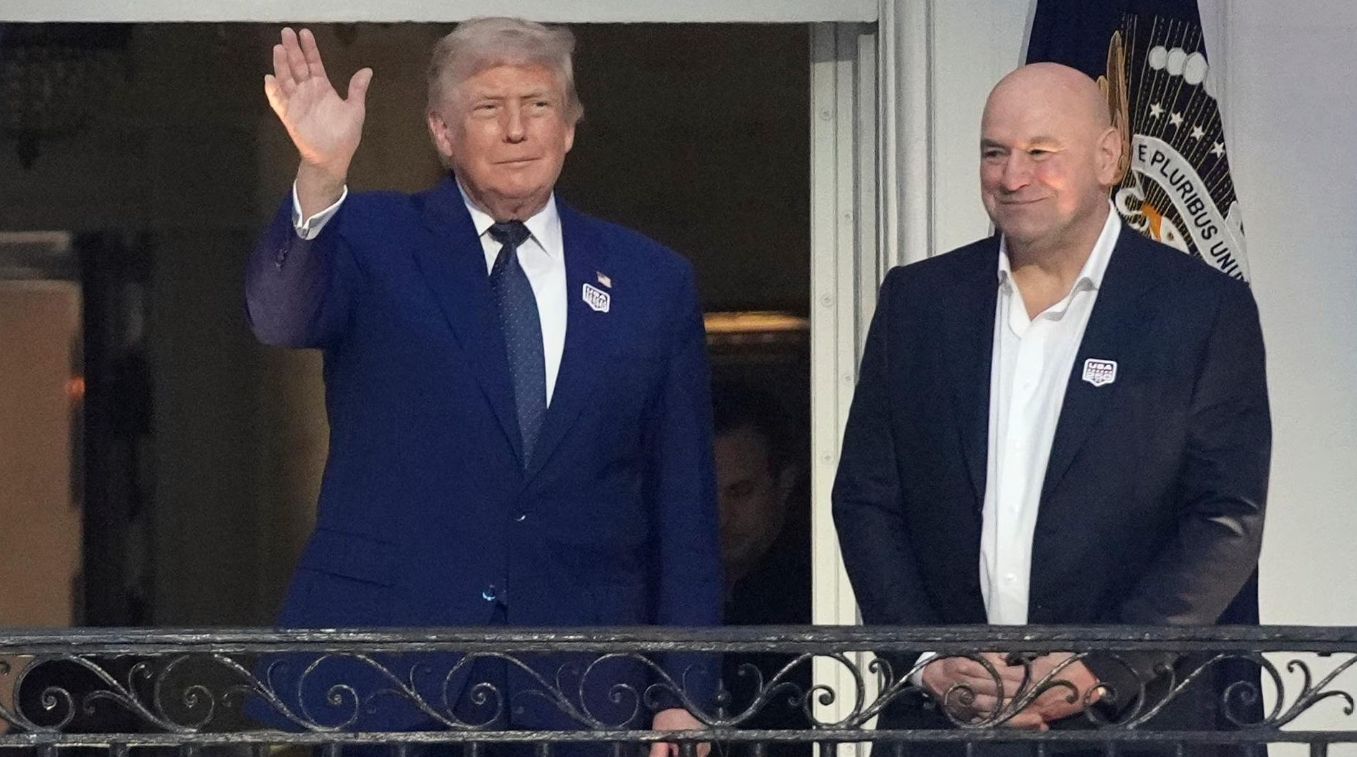
The deal was announced by the US President on his Truth Social platform shortly before the UFC event on the South Lawn of the White House, with Mr Trump declaring “ships of the World, start your engines. Let the oil flow.” The US President said the deal would bring “peace and security to the whole region,” although the text of the memorandum of understanding has not yet been released.
“Many presidents have tried to make peace with Iran, and all have failed before me,” Mr Trump posted. “The leaders of the region have, for the first time, found a president who can help them achieve real peace,” he said. “With the opening of the strait upon the signing of the deal on Friday, for purposes of mine removal, oil will flow on both ends again for the region, and the world.”
Pakistani Prime Minister Shehbaz Sharif confirmed the deal, posting on social media that he was pleased to announce a peace agreement involving an “immediate and permanent termination of military operations on all fronts, including in Lebanon.” Mr Sharif said the official signing ceremony would be Friday in Switzerland and thanked both the United States and Iran for their “commitment to finding a diplomatic solution to the conflict.” He said there would now be a “series of meetings this week” for “pre-implementation discussions” to lay the foundations for the technical talks and the official signing ceremony.
The breakthrough will set up a 60-day period for more detailed negotiations over Iran’s nuclear program but, in return, Iran expects that billions of dollars in frozen assets will be released.
The Fars News Agency, linked to the Iranian Revolutionary Guard Corps, posted on social media that Iranian Deputy Foreign Minister Kazem Gharibabadi had said that the text of the final memorandum of understanding had been completed. The Iranian news outlet said that Mr Gharibabadi had confirmed the “official signing of the Islamabad memorandum of understanding will take place on Friday in Switzerland.” Mr Gharibabadi stressed that there would be an “immediate and permanent end to the war and military operations across various fronts, including Lebanon.”
The US President told the Wall Street Journal that the deal would include a commitment from Iran not to obtain nuclear weapons and the immediate reopening of the Strait of Hormuz. He was not concerned about immediately retrieving Iran’s stockpile of highly enriched uranium, saying this could come later. “We’ll get the nuclear dust later on when we’re ready to go in and do it. I’d say over the next month or two, there’s no rush,” he said. Mr Trump described the material as “harmless.”
The US President said that Iran wanted to complete a deal and dismissed suggestions that he wanted to achieve regime change. “This has never happened to them before,” he said. “As far as regime change, I never cared about regime change. This is the third group we’ve dealt with, and this is the most rational group yet.”
However, a breakthrough was not guaranteed and initially appeared uncertain after there was the prospect of a serious escalation in the conflict earlier in the day. This occurred when Israel bombed the southern suburbs of Beirut in Lebanon, with Mr Trump publicly expressing his shock at the move. He told Axios that it was “so bad – I couldn’t believe it. An hour before we are supposed to sign the deal.”
“It delayed the signing by a few hours. It was supposed to be now. Now it is scheduled for a few hours from now,” he said. “Why did Bibi have to do a f*cking attack? I was so pissed off. I let him know. He has no f*cking judgement. I let him know that.” CNN reported that Mr Netanyahu was pushing for a meeting with Mr Trump after the G7 summit in France this week.
The Times of Israel reported that Israeli officials were left “stunned” by Mr Trump’s public criticism of Mr Netanyahu’s decision to strike Hezbollah targets in Beirut, warning that a prospective US-Iran agreement could restrict the military freedom of the Jewish state in Lebanon. One senior Israeli official was quoted as saying that “Trump’s statement is a resounding slap in the face.”
“The restrictions [on Israel] have been taken to another level,” the official said. “The expectation that we will not strike anywhere in Lebanon is incompatible with the behaviour of a strategic ally.”
The Israeli strike against a Hezbollah command centre in the Dahiyeh district of Beirut was reportedly conducted after prior notice was given to US Central Command. According to the IDF, the strike was launched in retaliation for a rocket launched by Hezbollah which struck near the northern Israeli community of Neot Mordechai (Saturday evening, 7:53 pm Israel Time).
This came close to setting off a new escalation with one of Iran’s top military figures warning that the regime had its “finger on the trigger” and was prepared to attack Israel if the Jewish state made the “slightest slip.” Major General Ali Abdollahi, commander of Iran’s top joint military command, was reported as issuing a stern warning. He said the Islamic regime’s “combat, defensive, missile, naval, drone, and air defence capabilities” were “more powerful than ever before.”
“And the sons of the nation in the armed forces are ‘finger on the trigger,’ ready to fire into the heart of the enemy,” he said. The chair of Iran’s national security committee, Ebrahim Azizi, also posted on social media that “today’s crime by the Zionist regime in Dahieh, Beirut once again proved the US is weak without credibility.”
“It is not even capable of controlling this illegitimate regime,” he said. “A strong response is coming.”
South Carolina Senator Lindsey Graham, a leading Republican foreign policy hawk, posted on social media that he was “pleased to hear the memorandum of understanding with Iran to allow the Strait of Hormuz to open has been agreed to.” But he said he was “somewhat concerned that Iran’s view of the agreement seems different than what the American negotiating team is claiming.”
“Under our law, any nuclear deal with Iran will be sent to Congress for review and a vote,” Senator Graham said. “I look forward to reviewing the final product and I believe it is imperative that the architect of the deal, Vice President Vance and his negotiating partners, be part of the process in presenting the final deal to Congress.”
The New York Times reported that Iranian officials had waited until after midnight locally before finalising the agreement because they did not want the announcement to coincide with Mr Trump’s birthday - but the time difference meant the breakthrough was made public in America on his 80th birthday anyway.
|
The Australian
Andrew Dowell and Robbie Gramer, Wall Street Journal
Sunday 21st June 2026
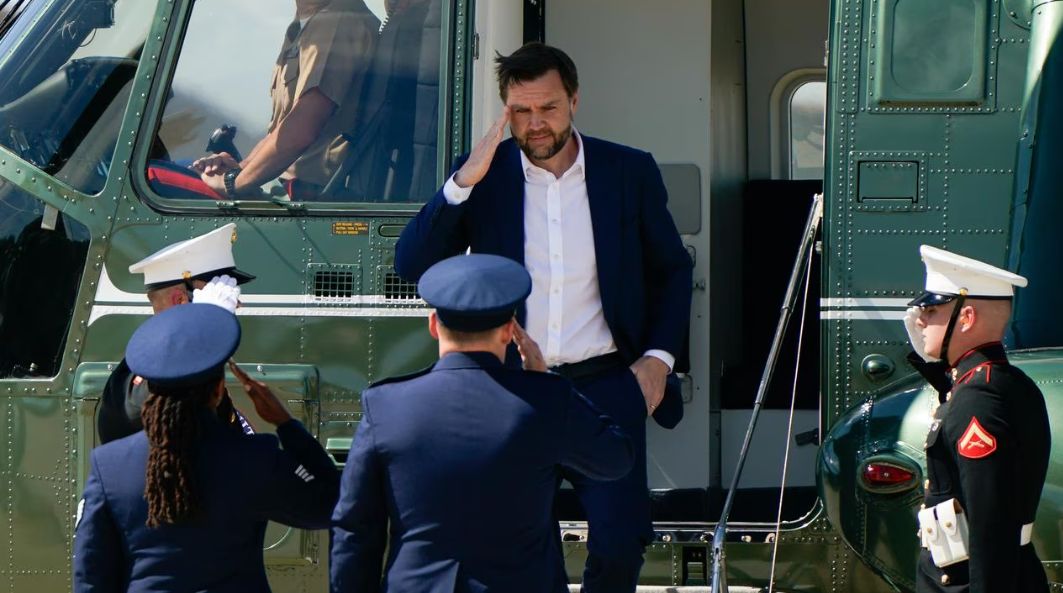
US Vice-President JD Vance on Saturday headed to peace talks in Switzerland, signalling renewed efforts to keep an agreement signed earlier this week by President Donald Trump on track after Iranian security officials said they had closed the strategic Strait of Hormuz. The announcement of the strait’s closing by Iran’s joint military command came as clashes between Israel and Hezbollah flared again in Lebanon on Saturday, just hours after the two sides agreed to a renewed ceasefire. It undid for now the main achievement of the deal, which was to set the stage for reopening a waterway vital to world energy markets.
“I think we’re going to hopefully make progress on the nuclear issue, make progress on the Lebanon ceasefire issue,” Mr Vance said in a briefing with reporters before boarding his flight to Switzerland with second lady Usha Vance. On Lebanon, Mr Vance said, “Despite the headlines, things are actually getting better there, and things are slowing down a little bit.”
The US Central Command, which oversees forces in the Middle East, said Saturday that traffic continued to flow and the military was monitoring to make sure that remained the case. Trump said on Saturday no tolls could be imposed in the strait except by the US. “There will be NO TOLLS in the Hormuz Strait for 60 days during the Cease Fire Period, and there will be NO TOLLS after the 60 day period has expired, unless they are imposed by and for the United States of America,” he wrote on social media.
Even before Iran’s announcement, however, the recovery of traffic through the strait had been halting. Iran had imposed new procedures, including a demand that ships register to cross two days in advance, and wary shipowners were monitoring the still uncertain environment in the waterway.
The flare-up in fighting comes as the US and Iran work to get their next round of peace talks back on track. Iran said Saturday its delegation would attend talks in Switzerland after postponing plans to travel Friday, a hiccup that followed an earlier round of heavy Israeli strikes carried out in retaliation for a Hezbollah drone attack that killed four Israeli soldiers.
Iran said its delegation would include chief negotiator and parliament speaker Mohammad Bagher Ghalibaf, Foreign Minister Abbas Araghchi and oil officials. The US was expected to send Vice President JD Vance, who said in an interview on Fox News that envoys Steve Witkoff and Jared Kushner were already there engaging in technical discussions. The memorandum of understanding that aims to reopen the strait and end the fighting, signed Wednesday by Mr Trump, says at the outset that the war on the Lebanese front must end as well. Iran’s Foreign Ministry spokesman said Saturday the country’s negotiators would press the US to meet those obligations.
Israel and Hezbollah, an Iran-backed militant group that acts independently of Lebanon’s government, agreed to a renewed ceasefire that took effect at 4pm local time Friday.
But on Saturday, Lebanese state media reported a new round of Israeli attacks including around the southern city of Nabatieh. The Israeli military carried out the attacks after Hezbollah fired more than 50 times at Israeli forces in southern Lebanon, a military official said. Lebanese health officials said seven people were killed in the strikes. They said 83 people had been killed and 141 wounded in the earlier attacks, in which Israel said it killed dozens of militants.
Saturday’s strikes extended the fallout of what had been one of the most serious escalations in Lebanon since a ceasefire was reached in April. The fighting had never stopped for long despite the truce, as Israel continued to hold territory in southern Lebanon and the two sides repeatedly clashed. Israel considers the fight against Hezbollah to be a vital national-security issue. Top Israeli officials including Prime Minister Benjamin Netanyahu and Defence Minister Israel Katz have said the country won’t back down and will continue to hold territory in Lebanon until Hezbollah is vanquished.
The Trump administration has vacillated in its messaging to Israel, at times supporting the country’s right to defend itself but at other times lashing out at its wartime ally. “They have to get a collar on their dog,” a senior administration official said of Hezbollah’s patron Iran at a press briefing Wednesday, where the US read out the text of the memorandum of understanding. “If Hezbollah attacks Israel, Israel’s going to have the full ability to go and attack”.
Mr Trump and Vice President JD Vance then criticised Israel in tough terms for what they called excessive use of force. The president softened his tone Friday (Saturday AEST), telling reporters that Israel and the US fought well together and praising Mr Netanyahu. “We’ve had a great relationship with Israel, we were very formidable,” Mr Trump said. “And Bibi Netanyahu is a warrior prime minister, and he should be acknowledged as that.”
Iran moved late in the week to set up new procedures for navigating the Strait of Hormuz under its newly created Persian Gulf Strait Authority — an attempt to codify the influence it won over the waterway by attacking ships during the war. The authority said in a social-media post Friday that shippers will be expected to pay fees for security, safety, environmental services and Iranian insurance but that they will be waived for 60 days.
Mr Trump’s deal requires Iran to allow toll-free traffic for 60 days but lets Iran set negotiated terms for future management of shipping in the waterway. “The Islamic Republic of Iran will conduct dialogue with the Sultanate of Oman to define the future administration and maritime services in the Strait of Hormuz in discussion with other Persian Gulf littoral states,” the memorandum of understanding says.
Ships move through Hormuz as plan to move stranded vessels gets underway
The Australian
Agency writers
Wednesday 24 June 2026
A United Nations agency has said a plan is underway to move stranded ships and their thousands of crew members through the Strait of Hormuz. The plan to evacuate 11,000 crew members stranded on ships is being done in cooperation with Iran, Oman, all other coastal states in the region, the United States and the maritime industry, according to the secretary-general of the International Maritime Organisation, Arsenio Dominguez.
“We have secured the necessary safety guarantees and have thoroughly verified the conditions for safe navigation to support these operations,” he said in a statement. The organisation said moving the ships will be done gradually to avoid any risk of collision.
The US has said that negotiators have discussed “mechanisms” to ensure that the strait remains open. Ship traffic is increasing but questions remain about who controls the passageway. Data and analytics company Kpler (based in Belgium) confirmed 39 ships crossed through the strait Monday, after about 92 crossings between Friday and Sunday. Prior to the war, roughly 100 ships a day made the journey.
On Wednesday, 70 confirmed crossings were recorded. “Iran continues to tightly manage the northern routes, issuing what we’ve heard are selective permits and phasing of agreements,” shipping journal Lloyd’s List editor-in-chief Richard Meade said in a briefing on June 25. European minesweeping vessels headed to the region to remove the mines blocking safe navigation in the strait’s main corridor have passed through the Red Sea, Britain’s navy said in a statement on June 23.
Israel and Lebanon sign framework agreement after US-brokered talks
BBC
Saturday 27 June 2026
Israel and Lebanon have signed a framework agreement in Washington after several days of negotiations brokered by the US. US Secretary of State Marco Rubio said the agreement will begin to put in place a framework for lasting peace and security.
In the 14-point framework agreement, Israel and Lebanon both "affirm" the right of each state to "live in peace", and express "mutual desire to live in security as neighboring sovereign states". It makes specific note to a "cessation of all hostile or adverse actions in international political or legal fora (forums)" between Israel and Lebanon, with both nations pledging to work towards the release of detainees, as well as the return of any remains. However, both governments acknowledge that "nothing in this Framework prevents them from exercising their inherent right to defend themselves".
The agreement says that the Lebanese Armed Forces (LAF) will restore effective sovereign authority over all Lebanese territory, "pending the verified disarmament of non-state armed groups and dismantlement of associated infrastructure". In order to achieve this, Lebanon makes a specific request for the support of international and "particularly Arab partners, under the leadership of the US". A US-supported military coordination group will also be established to help implement the framework.
Lebanon's President Joseph Aoun said the framework was a first step to restoring sovereignty.
But shortly after the signing, Israeli Prime Minister Benjamin Netanyahu reiterated that Israeli forces would remain in southern Lebanon until Hezbollah disarms. The Israeli army is currently occupying around 5% of the country's territory. He said Israel was "allowing the Lebanese army to begin organising to take over some territory" in two pilot zones - one south of the Litani River and another north of it.
On Saturday Hezbollah leader Naim Qassem accused the Lebanese government of making damaging concessions. "The framework agreement in Washington is humiliating, shameful, and a surrender of sovereignty. This agreement is null and void," he said. Qassem criticised provisions linking Israel's withdrawal to the group's disarmament, saying they crossed "all red lines". He accused Lebanese authorities of committing a "grave blunder" which "may even lead to the annexation of these lands", and vowed that Hezbollah would continue its armed resistance.
Later on Saturday Israeli Defence Minister Israel Katz said Israeli forces had been ordered to "prepare for an extended stay in the security zone" - referring to an area up to 10km (six miles) inside Lebanese territory.
US launches new strikes on Iran after it closed Strait of Hormuz
The Australian
Wall Street Journal/AFP/Agencies
Sunday 12 July 2026
Fighting between the US and Iran intensified on Sunday, with the American military hitting a wide range of new targets and Tehran claiming it had launched attacks on several of Washington’s allies in the region. The skirmishes represented a higher level of military activity between the two foes since the ceasefire went into effect in June. President Donald Trump declared the ceasefire over last week after Iran fired on ships heading through the Strait of Hormuz.
Now the two sides are locked in a stalemate over the strait, a waterway through which 20 per cent of the world’s oil flowed before Iran effectively shut it down during the war. Trump administration officials have grown pessimistic about ongoing negotiations with Tehran and frustrated about Iran’s continued attacks on Hormuz shipping. “Iran made a poor choice. Now they pay,” US Defence Secretary Pete Hegseth said on social media.
On Friday 10th July, senior officials told reporters a nuclear deal was increasingly unlikely warning there would be serious consequences if Iran didn’t guarantee safe passage of ships. The White House wanted Iran to issue a statement declaring the Strait of Hormuz was open and that it would stop attacking commercial vessels. Instead, the Revolutionary Guard took aim at yet another ship seeking to transit the waterway near the coast of Oman and declared the strait closed.
President Trump ordered new strikes on Iran overnight on Saturday local time. The fresh round of US strikes took aim at Iran’s radars, launchers, missile and drone storage depots and other military sites. Explosions were reported along the coast of Iran, in places such as Bandar Abbas and Chabahar near the Strait of Hormuz. The US military said it hit 140 Iranian targets with precision munitions launched by jet fighters, drones and warships. The fresh round of strikes was much larger than previous rounds over the past week and intended to send a message that the US will hold Iran accountable for attacking commercial ships, military officials said.
Explosions were heard over Qatar’s capital on Sunday after the US strikes, with correspondents reporting interceptions in the sky above Doha, a key mediator between Washington and Tehran. Residents received messages on their phones urging them to “remain in their homes and safe places”.
Extract from Update Monday afternoon EDT
Trump orders levy, orders renewed strikes on Iran
Joe Kelly, The Australian
Donald Trump has signalled the US will reimpose its blockade on the Strait of Hormuz, saying Washington will immediately start to charge *20 per cent on all cargo shipped through the waterway in return for safe passage and provoking a counter offer from Tehran which said it would provide secure transit for a lower price.
*Reversed in a Truth Social post 11am Tuesday (1am Wednesday AEST)
"Based on highly productive conversations with Middle East leadership, I have decided to replace the 20 per cent United States Reimbursement Fee with Trade and Investment Deals that the various Gulf States will be making into the United States"
Speaking in a radio interview with Hugh Hewitt on Monday (3pm - 6pm EDT), Mr Trump said that US forces would resume strikes against Iran and stressed that “we’re going to hit them very hard tonight, and we’re gonna hit them hard tomorrow”
“And there’s not a damn thing they can do about it,” he said. Doubling down on his threat to impose a levy on Hormuz, Mr Trump said the US should be reimbursed by “the countries that we’re helping” in the conflict with Iran. “I want to be reimbursed because we’re protecting a very rich portion of the world,” he said. “We don’t need it, but we need it from the standpoint of protecting allies,” he added, insisting that the US has done a “a very effective job” at protecting Israel, Saudi Arabia, Qatar and the United Arab Emirates.
US Central Command said that, as of 4.45pm (6.45am AEST Tuesday) it began launching the “third consecutive night of strikes against Iran. These strikes will continue imposing a heavy cost on Iranian forces and degrade their ability to attack innocent civilians and commercial shipping in the Strait of Hormuz.”
Mr Trump – who is delivering an address to the nation at 9pm Thursday night (11am Friday morning AEST) – posted on social media on Monday morning that he would reimpose the US blockade on Iran. He also said that America would be known in the future as the “guardian of the Hormuz Strait” and charge significant fees to protect commercial shipping.
“The Hormuz Strait is open, and will remain open, with or without Iran,” Mr Trump said. “We are reinstating the Iranian blockade, so named because it is only stopping Iran’s ships or customers from entering or leaving. All other countries will have fair and open use of the Strait. The USA will be, from this point forward, known as “the guardian of the Hormuz Strait” but as such, and as a matter of fairness, will be reimbursed, at the rate of *20 per cent on all cargo shipped, for any and all costs necessary to do the job of providing safety and security to this very volatile section of the world. The process and formation will begin immediately.”
Iranian Foreign Minister Abbas Araghchi responded to the comments, declaring that Mr Trump was “absolutely right” that a toll should be levied, but added that 20 per cent was “too much.”
“Whoever provides secure and safe passage of commercial vessels through the Strait of Hormuz should be compensated for this service,” he said. “Iran has always been the guardian of the strait and will remain so forever.” But he added 20 per cent was, “of course, too much. We will be fair.” Iran has continued to lash out at the Gulf nations which host US military bases, with strikes continuing on Monday against targets in Jordan, Bahrain, Kuwait and Oman.
US Central Command said that, at the direction of Mr Trump, it would resume blockading maritime traffic entering and exiting Iranian ports from 4pm on July 14 (6am Wednesday AEST). “The resumption of the US blockade against Iran follows the initial implementation from April 13 to June 18,” it said. “CENTCOM forces redirected more than 140 compliant vessels, disabled nine non-compliant ships, and allowed over 50 commercial vessels supporting humanitarian aid to pass through the blockade during the two-month period.”
“Additional information will be provided to commercial mariners through a formal notice.”
Mr Trump said on Monday that he was also weighing further strikes on Pickaxe Mountain at Iran’s Natanz nuclear site, describing it as a target “for a nice big fat shot right in the front door.”
“We’re going to take out Pickaxe Mountain. Tell the Iranians to be ready.” He told Fox News that America was going to “keep the strait and we’ll probably run it” and likened the US to the “guardian angel of the strait.”
Update 18th July
US strikes hit Iran for seventh consecutive night
BBC
The US military said it carried out the seventh night of strikes on Iran since President Donald Trump declared the temporary ceasefire agreement was "over". US Central Command (Centcom) said its forces "hit surveillance sites, military logistics infrastructure, underground weapons storage, and maritime capabilities".
Iran said it responded by targeting US allies in the region including Kuwait, which said another of its power and water plants had been hit following a similar attack the previous day. "Another electricity and water distillation plant was targeted by a hostile attack that led to a fire erupting in one of the plant's components," with some power generation units deactivated, the ministry of electricity and water said.
Jordan's military also said it had intercepted 10 Iranian missiles fired into its airspace overnight. No damage was reported. Bahrain also said its air defences had "thwarted" Iranian attacks.
Centcom said it had ended its strikes at 5:00am local time (11:30am AEST) after several hours. "US forces employed fighter aircraft, aerial drones, and warships in addition to other assets," it said in its statement. Explosions were heard in the central city of Yazd and at Qeshm island and the port of Bandar Abbas next to the strait, Iranian state media reported.
** End report
Click here for Assad downfall in Syria in December 2024
Click here for earlier news in Iran, street protests in January 2026
Earlier News in Israel
- Yasser Arafat 1929 - 2004, Fatah, PLO, and Lebanese War
- Six Day War, June 5-10 1967
- Closure Lebanese war, August 14 2006
- PLO Interior Minister resigns in Gaza City, May 14 2007
- Annapolis Maryland Peace Conference, November 29 2007
- Iraq Iran truce in Tehran, June 14 2008
- Markets Spin in New York, October 1 2008
- Israel hammers Gaza, December 28 2008
- Fault lines in Netanyahu's fractious alliance, April 6 2009
- Washington jitters, July 29 2009
- Israel agrees to settlement moratorium, November 27 2009
- Israel 'wrecks' peace talks, March 12 2010
- Gaza naval raid, June 1 2010
- Peace or War on settlements, September 20 2010
- Arab "spring", January 29 2011
- Golan Heights confrontations, June 7 2011
- West Bank recognition at UN, September 17 2011
- Iran fires missile near Hormuz in Persian Gulf, January 2 2012
- Iran's nuclear facilities, February 28 2012
- Damascus bomb attack, July 19 2012
- Israel prepares for War with Iran, September 18 2012
- Hamas leader assassination, November 15 2012
- Netanyahu election victory, January 23 2013
- Syria's civil war, June 1 2013
- Western action in Syria, August 28 2013
- Bethlehem separation barrier, December 26 2013
- Gaza offensive, June 21 2014
- State land announced at Gush Etzion Bethlehem, September 2 2014
- Ehud Olmert jail sentence, May 26 2015
- Netanyahu announces Golan Heights is Israel's, April 19 2016
- Jordan thanks Trump (for tempering Temple Mount crisis), July 28 2017
- Israel strikes Syria, April 10 2018
- Israel election, April 7 2019
- Trump's Peace Plan, January 28 2020
- Israel election, March 23 2021
- East Jerusalem clashes, May 11 2021
- West Bank aid offer, February 9 2022
- Israel election, November 1 2022
- Protests in Israel and Backdown by Netanyahu, June 30 2023
- includes Attack by Gaza October 7 2023
- War in Gaza, January 10 2024
- War in Gaza, June 15 2024
- War in Gaza, November 27 2024
- includes Truce in Lebanon
- War in Gaza, May 20 2025
- Peace statement October 1 2025
** End of article